EPC Companies and Industrial Manufacturers: Your Next International Project Shouldn't Depend on Who Calls You First
Most EPC companies win international work the same way: a referral, a trade show contact, a relationship that took years. That produces deals, but unpredictably. You cannot forecast on it, staff around it, or scale from it. GlobalSDO is the outsourced SDR team built specifically for industrial exporters who need a structured, repeatable pipeline of booked meetings with real international buyers.
The Pipeline Problem EPC Companies and Industrial Manufacturers Know Too Well
Referral dependence is not a sales strategy. It is a waiting strategy. And it creates a specific set of operational problems that compound over time.
No predictable pipeline
When all your deals come through referrals and inbound inquiries, there is no pipeline — there is only a queue you cannot control. You cannot see what is coming in 90 days, which makes resource planning and project staffing a guessing exercise.
No structured outbound approach
Most EPC and industrial manufacturing companies have never built a systematic outbound sales motion for international markets. There is no ICP definition, no account list, no cadence, and no ownership of follow-up. Deals that could have been pursued are never contacted.
Poor visibility in international markets
Buyers in the US, GCC, Europe, and Southeast Asia are not searching for you. If your outreach is passive, you are invisible to procurement teams and project owners actively evaluating vendors for upcoming CAPEX projects.
Long CAPEX-driven buying cycles with multiple stakeholders
EPC and industrial procurement decisions involve plant operations, project engineering, procurement, and sometimes quality or compliance teams. Single-threaded outreach stalls when one contact goes quiet. Without multi-threading across the buying committee, deals that should close simply expire.
RFQ and vendor-qualification gatekeeping
Getting onto a vendor shortlist in a new geography requires more than an email. Buyers have qualification criteria, compliance requirements, and documentation expectations. Outreach that does not speak to those realities gets filtered out before the conversation starts.
Unqualified meetings that waste engineering and sales time
Price-shopping inquiries, non-decision-makers, and buyers with no active project in scope all consume time your technical team cannot recover. The handoff from SDR to your team should only happen when a meeting is genuinely qualified.
Difficulty identifying real decision-makers at project owners and plants
Plant-level and project-level decision-makers are not always findable through standard databases. Outdated contact data, inconsistent company structures across regions, and generic job titles all make it hard to reach the people who actually control vendor selection.
How GlobalSDO Builds a Structured Export Pipeline for EPC and Industrial Sellers
Every engagement starts with a precise ICP definition — the specific company profiles, project types, geographies, and buyer roles that match your scope and deal size. We do not send outreach to a broad list and wait. We define the accounts worth pursuing before a single message goes out.
From there, the work is operational and specific:
Verified account research and list building
We build verified account lists targeting plant operations directors, procurement leads, project engineering managers, and CAPEX decision-makers at the project owners, EPCs, and industrial manufacturers that match your ICP. Contact data is verified before it is used.
Multi-stakeholder, committee-level outreach
EPC and industrial deals do not close through a single contact. We map the buying committee — procurement, engineering, quality, plant ops — and run multi-threaded outreach across those roles simultaneously. When one contact goes quiet, the engagement does not stall.
Engineering-fluent messaging
Our SDR team writes and delivers outreach in the language of industrial procurement: RFQ timelines, vendor qualification requirements, compliance documentation, project scope, and CAPEX approval stages. Buyers recognize the difference between a generic pitch and a message that understands their procurement context.
Omnichannel outbound execution
We run cadences across calling, email, LinkedIn, and WhatsApp, with time-zone-aware scheduling for buyers in the US, Canada, Europe, GCC, Southeast Asia, and Africa. Cross-border email deliverability management and response-rate tracking are built into every campaign.
Qualified meeting handoff with full reporting
Your team receives meetings qualified against defined criteria: the right company profile, the right stakeholder role, and an active or near-term project in scope. Every engagement is tracked and reported so you can see exactly which accounts are engaged, at what stage, and through which channel.
Dedicated pod model with no account dilution
A dedicated strategist, SDR team, and data and ops support are assigned to your account only. Your outreach is not competing for attention against twelve other clients running through the same team. Onboarding, ramp, and ongoing execution are all handled within the pod.
From Referral-Dependent to Pipeline-Visible: An EPC Company Case Study
One EPC company came to GlobalSDO with a sales motion that was entirely reactive. Every project in their pipeline had arrived through an existing relationship or a warm introduction. There was no outbound activity, no account list, no defined ICP, and no process for reaching project owners or procurement teams in target export markets.
GlobalSDO's work began with ICP definition: identifying the specific project types, geographies, and buyer roles that matched the client's technical scope and project size. From that foundation, we built a verified account list targeting procurement leads and project engineering managers at relevant project owners in priority markets.
Outreach was structured as a multi-threaded cadence covering procurement, plant operations, and engineering stakeholders within each target account — using messaging framed around vendor qualification, project timelines, and compliance context, not generic sales language.
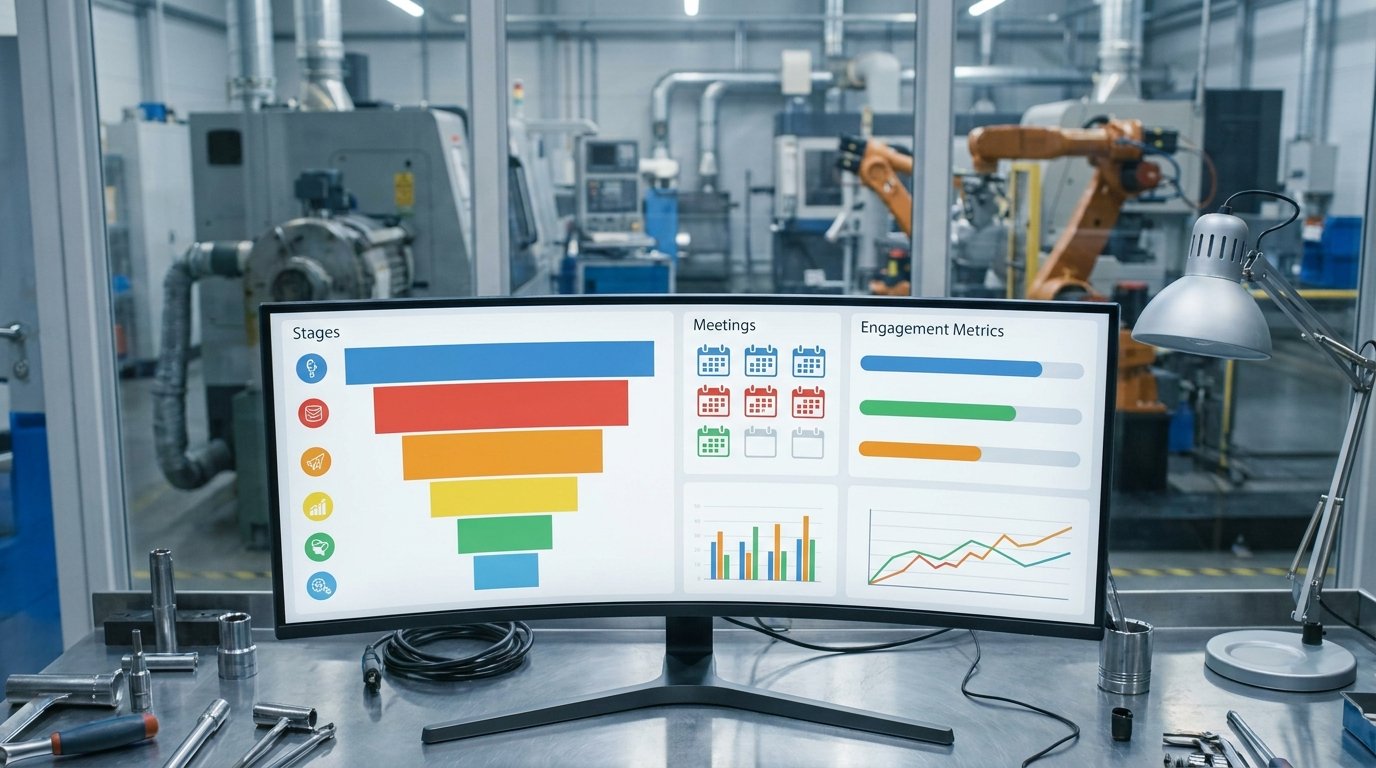
The result was structured pipeline visibility: defined stages, tracked account engagement, and a consistent flow of qualified meetings with buyers who had active or near-term project requirements. The pipeline moved from opaque and referral-gated to a format the sales team could forecast from and act on.
Map Your Export Pipeline Before the Next RFQ Cycle Passes You By
EPC and industrial procurement timelines are long. Vendor lists for active projects are often finalized months before an RFQ is issued. If your outreach starts when the RFQ appears, you are already late.
A pipeline strategy call with GlobalSDO covers your current ICP definition, the target geographies and buyer roles most relevant to your project scope, and the outbound execution gaps that are keeping qualified meetings from reaching your sales team. We work specifically with EPC companies and industrial manufacturers targeting international buyers — so the conversation starts at the right technical level from the first call.
Start with a Pipeline Strategy Call
Tell us about your target markets, project scope, and current outreach gaps. We will map a structured pipeline approach tailored to your export goals — no generic playbook, no shared team.
-
Email
-
Phone
-
AddressBeside Mahindra Showroom, First Floor, Reality Warehousing Pvt Ltd, Gat No.-1337/1, Pune-Nagar Road, Wagholi, Pune-412207